Category: Life

  • Thoughts on dinosaurs

    Do you remember that part in Jurassic Park when the little boy is teasing Dr. Grant about his book not being very thick? Then the doctor’s wife chimes in, “Yours was fully illustrated.” I love illustrated books (mostly anyway, some things should just be left to the imagination). Especially if they are about something really cool like dinosaurs.

    I guess I am still on a dinosaur kick. I have two more thoughts on the subject.

    One should always catch on dinosaur reading before trying to answer questions about them. A lot has changed in the past decade alone. Things that used to be considered “wild speculation” about them are now taught as fact. Brontosaur and apatosaurus are the same thing… Birds are dinosaurs… Dinosaurs were killed by a meteor… We know some of their colors…

    Second, I am still not sure which is more terrifying:
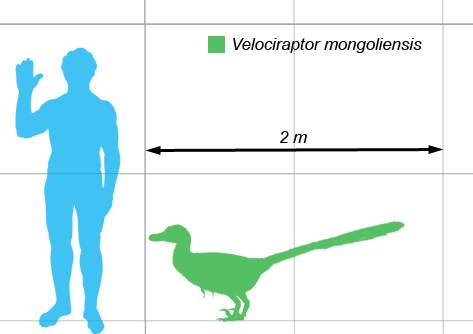
    The giant velociraptors that Jurassic Park wrongly depicts (Based of the size, I think they were actually showing deinonychus:

    4-5 foot tall deinonychus
    2-3 foot tall velociraptor

    but who I am to question Steven Spielberg. Graphics from Wikipedia.org)

    Or… that velociraptors were covered in feathers, vastly improving their jumping capabilities.

  • Some places on earth…

    Ankeny Hill: The only place I look to the ground to see the sky.

  • A Hard Life Without Empathy

    I recently met a young man whose life was “made.” His parents were rich and give him a generous monthly stipend, he had a fat trust account waiting for him when he turned 25 years old and had lacked little (if anything) growing up. Interestingly, he was not a spoiled brat. Not in the traditional sense at least. He was well mannered, generally respected the space and possessions of others and even had used his intelligence for somewhat worthwhile causes.

    In addition to a wealthy upbringing, his life was “made” in other ways: he had never had a rough patch in his life. High School had been a breeze, his family was almost picture perfect, people flocked to him to be his friend, he had had a one girlfriend and had never experience manual labor.

    As I associated with him during his first semester of college, I grew to enjoy his generally pleasing demeanor and upbeat, good, clean, fun loving attitude. While we did not hang out a lot, he lived with some friends of mine and so I would periodically run into him.

    I was tempted to be jealous of him from time to time—I love the thought of a trust account and the thought of how my life would be different if everything had been handed to me—until one day when we were talking about his academic goals. He was schooling for a degree in Business Management and planned of getting a Master of Business Administration after that. I am always confused as to why anyone would get a degree in Business Management (because it teaches so few real skills and instead stuffs the heads of young people full of theories on how businesses should work), so I inquired why he was pursuing such. The answer: because his grandfather did (and got rich from it) and his dad did (and got rich from it) so too would he (and, he hoped, would get rich from it). The fatal flaw in his thinking is that he had no idea what “business” even is let alone important things like how his ancestors got rich with business degrees. He just knew that they did.

    At first it was comical to probe this area of his mind but as naivety turned to ignorance and then to lack of comprehension I started to get worried. How could he get a degree in something that they knew nothing (and I mean nothing) about? To be clear, I do not expect most students pursuing university degrees or trade certificates to be experts in their field of study (if so, why would be there?). I do expect them to have at least a basic understanding of their chosen field. If one is going to spend four years of their life studying something, they should have some idea what that field entails.

    There was none of that here. He knew that businesses ran stores and stores charged money and he swiped a card to pay them. He did not know how the store figured out what should go on which shelves where, what it meant to buy a share of stock or even how the store shelves got restocked. It was all a mystery.

    Beyond the mysteries of the business degree he was seeking, I also became disturbingly aware of his complete lack of cognitive empathy. That is, he could not imagine what other people experienced (as opposed to affective empathy in which one can relate to others’ experiences because one has experienced similar).

    That became glaringly obvious one day when he got into an argument with one of my former roommates. In this argument, the young man became vehement as he wondered how anyone could be such a failure as to be “old” (by which he was meaning, 25 years old) and not be married when he had arrange for his girlfriend of four years to marry him at age 21. Further, he could not understand how one could surpass 24 years old without getting a degree. Anyone, he exclaimed, who did not do well in school should just drop out because they were not smart enough to it and perseverance was a myth.

    These were scathing words from one so young to one not much older; yet they were also very telling of the young man’s easy life. He had never known the difficulty of finding a girl that he liked who liked him back. His girlfriend seemed to not know that other boys even existed. Beyond that, he seemed to think that plans laid in teenage years were all but assured to come true. Thus a failure to be married at 21 was a failure to plan correctly and had little to do with one’s circumstances.

    College, he believed, should be as easy as High School. High School was a venue that he saw very little of. He had one of the easiest High School experiences I had ever heard of including very, very generous absent policies. Further, college was just a recap of prior schooling so if you learned it the first time you should be able to show up for the test (and ace it) without issue. Perhaps ironically or perhaps tragically, he failed his first semester of classes.

    Things like depression, sadness and all but the most obvious of physical pain (things like getting punched in the gut and not things like aching bones) were all just figments of imagination and as such could easily be overcome by simply dismissing the thoughts. Thus his spoiling was not in his meticulous manners but was an inability to understand the troubles of those around him.

    In other words, his life had been so easy that he had never developed empathy sufficient enough to even imagine some of the most basic ailments of his associates. The saddest part for me was the realization that he would eventually have to trudge through sorrow equal to the joys he had known and that while in a dark valley that to most of us would be little more than a “bad day” he would feel like he had just descended into nethermost depths of the inner bowels of the earth never to emerge into the light of day again. Life, that which had once come so easy, was going to become seemingly very, very hard.

    Only seemingly though because compared to everyone else, his troubles will be nothing new; indeed for some his soon-to-come difficult experiences would be seen as “everyday life.” This is where the darkness of his path will come. For where this young man could not have empathy for those with hard lives, others would not have sympathy for his easy life.

    Realizing how much cognitive empathy has helped me in my life, I was no longer tempted to be jealous of my friend but, instead, to pity him and the smallness of his world—rather, the bigness of the world that he cannot yet understand—and the great pains of growth that I hope he accepts as he an opportunity to grasp the larger world.

    That being said, if I could get a fat trust fund in addition to my empathy, I would take it.

  • I live with a bunch of four year olds

    I wrote this some years ago and though I have not lived with such roommates for some time, I find humor and reason to be grateful in it. While it was originally written with a certain group of roommates, I have modified it through out my time at school so it no longer represents any one group of roommates but rather my general frustrations with roommates over time. I have put a little effort into updating some of the references.

    Okay, they may be five year olds, at times. But every day that I wake to an apartment in various levels of disarray I wonder how old my roommates really are. Well, mostly I wonder how they can be so rushed and harried as to seem so fragmented and disorganized while still not accomplish hardly anything at all.

    Though I am limited on my experience of life, I find that by comparison, if I were so rushed and harried as they, such would be indicative of substantial projects underway in my life, the boons for which are lacking when examining the lives of those in question.

    It would make sense to me to not be able to put your coat on a hanger in the coat closet when you came in from outside, if you were about to make a tremendous breakthrough in your latest research in nano technology. That is not the case. Instead one simply cannot be bothered.

    It would make sense to me to not be able to put the bar stools you used to rest your plate on when you ate dinner while watching TV if you were suddenly called away by the FBI to assist in a crime scene investigation. This is not the case either. Instead one is just too lazy.

    It would make sense to me to not be able to complete homework that was known about for more than a week, if you had been held up for the past week by kidnappers demanding ransom money. That is certainly not the case (otherwise, one would not have been able to leave one’s possession strewn throughout the apartment like a bread crumb trail to lead an unsuspecting mother to a magnificent trap). Instead one was too easily distracted.

    The part that really gets me is not so much that these, and many other, simple things go undone. Quite to the contrary, I am not a big fan of doing them myself and thus it is a of little wonder to me to see that others do not enjoy doing them as well. I have, however, learned that there is a deep and profound ease to life when the simple things are taken care.

    For example, having put my coat in my closet where it belongs, allows me to know exactly where to go to retrieve it. I never have to go wondering from room to room calling out “coat, where are you” or, worse yet, crying: “has anyone seen my coat (that I casually through on the counter as if I had no manners or respect for the other people living here because I had some how forgotten that I no longer live with my mother who used to take care of such things for me)”.

    Another example, by putting the bar stools back around the counter from whence they came (though I personally try to avoid using them to eat off of while sitting in front of the television), I never have to be embarrassed where company comes over and it looks like I have done nothing all week but sit in front of the television eating.

    One final example, if I do my homework, at least a little in advance (see my [past] blog called “Why I’ve Learned to Procrastinate”, I was supposed to have written it, but I have not) then I can go to bed at a normal time, wake up at a normal time and still be alive enough to participate in whatever fun things are going on.

    I was “wondering” aloud one day why such living space negligence happens, as I do frequently in increasingly disgruntled tones, and was immediately charged with “lambasting,” a word which here means “beating the already overworked and abused with a bamboo cane”.

    One roommate told me that he had an incredible 14 credits, oh the horrors and my sincerest apologies. For those who do not know or may have forgotten, 14 credits hours is supposed to be equivalent to a 42 hour work week (14 in actual class time and 28 in homework or out of class learning). Though, we all know that very few classes use their full allotment of out of class time. Unless you are taking all chemistry, higher math classes or the like, one does not come close to spending the full allotment of time on homework. Even if one was truly putting in 45 hours a week in schooling (a little extra for the benefit of a doubt), about the same as a full-time job, what makes such a person so incredibly busy that they cannot put their coat on a hangar in the closet (or at least throw it on their bed or chair so the rest of us, namely I, do not have to deal with it)?

    Another told me that he had a job. Wow, I am backing away from this one. This man is going to school AND working a part-time job (about 20 hours a week, unless he can cut it down to fewer hours, because he is working too much). Let me get this straight: he has no wife to talk with, children to play with, exotic animals to tend to, plants to prune, dying family members to take care of or even particularly needy friend to help; but he has a “job” (I wish you could hear the sarcastic tone this word makes in my head as I type it) and because he has a job, he is too tired to put the bar stool back in the kitchen or for that matter to even carry his dishes to the sink (let alone, wash, dry and put them away).

    Ah, the joys of living with big, little boys.

  • Good old check depositing days of yore

    My bank recently started allowing me to deposit my checks through my phone (I know, a cool feature that almost every other bank had, but they give me free checks so I stick with them). I had been really happy when I first got the feature, I could hardly wait to use it. Now, I am considering not using it any more because I found it introduced a void in my life.

    I live 30 minutes away from the nearest branch of my bank. Conveniently, the bank is surrounded by a fully featured city complete with shopping and delicious food vendors. Thus, previous to my mobile check cashing days, checks meant not only money (which is always a good thing) but also a  drive with a friend (or friends) and then often a meal with said party before another drive back home. It was a rare excuse to spend time together. While under the guise of necessity, everyone knew that it only takes one to deposit a check yet we were all glad for the time spent together and the excitement of breaking out of escaping, however shortly, the boring cycle that small towns can lock you into.

    Now I find myself in a new quandary. While I fully recognize that my previous reasoning was nearly invalid, I am struggling to come up with a new excuse of any validity. No excuse seems to be able to combine sufficient seriousness to justify the drive while still allowing enough levity to not encumber the evening.

    “Want to go want the wind mills?” is dismissed with, “That’s a good date, but not a good group activity.”

    “Want to go shopping and have dinner?” is met with, “If we had money to spend on frivolous things.”

    “Want to peruse a distant thrift store?” gets, “That’s a long way for nothing.”

    Even if I break down and call it what it is: “Want to go catch some dinner?” I still have to overcome, “What’s wrong with the restaurants in town?”

    Alas, I will still use my mobile deposits because I would feel lame to not use it (plus, mobile deposits do not cost gas to drive 30 minutes one way), but I will still fondly remember the “good old check depositing days” of yore.